Wednesday, 7 January 2015

Biscuits? Muffins? What should I call these mini-soda breads? Biscuits (American not English) typically
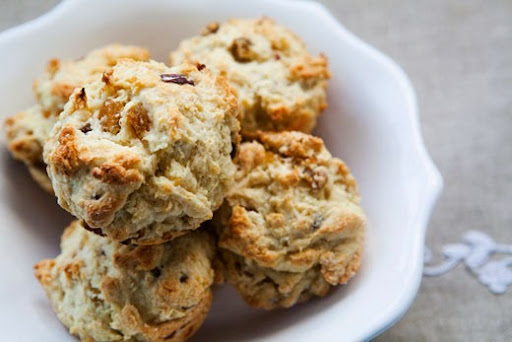
I’ve been struggling with this question for days. It’s been a good excuse to continue taste testing my way through the FIVE DOZEN I’ve made in order to perfect the recipe.
What I can tell you is that they are very good, and that the recipe is wonderfully flexible.
If you want them to be more like traditional soda bread (more biscuit tasting) you can leave out the sugar all together. If you want them to taste more sweet like muffins, you can increase the sugar. If you are going to eat them immediately, or trying to cut down on fat, you can reduce the butter. I made a version with raisins, a version with raisins and caraway seeds together, and even a version with just a teaspoon of orange zest as an add-in. They were all great. I was especially surprised at how good the caraway seeds and the raisins were together, in this slightly sweet biscuit/muffin. Obviously I preferred the full sugar, full butter version, but the lower sugar/lower butter version was good too (I just added more butter and jam to those).
Soda Bread Biscuits Recipe
Prep time: 10 minutes Cook time: 12 minutes Yield: Makes 12 biscuits.
Ingredients 3 cups all purpose flour 1/4 cup to 1/2 cup of sugar (depending on how sweet you want them) 1 teaspoon baking soda 1 teaspoon Kosher salt 1/2 cup (1 stick) unsalted butter, room temperature 2 teaspoons caraway seeds* 1/2 to 1 cup of raisins* 1 1/4 cups buttermilk**
*These add-ins are entirely optional. You could just do plain biscuits, or add in a teaspoon of orange zest, lemon zest, or a couple tablespoons of chopped candied ginger, or a teaspoon of minced rosemary. Have fun with it!
**You can substitute the 1 1/4 cups buttermilk with 1 cup 3 Tbsp of regular whole milk mixed with 1 Tbsp of white vinegar.
Method
1 Preheat oven to 425°F. Butter a standard muffin pan.
2 In a large bowl, vigorously whisk together the flour, sugar, baking soda, and salt.
3 Cut the butter into tablespoon sized pieces into the bowl of flour. Using your (clean) fingers, work the butter into the flour, schmooshing (is that a technical term?) the butter between your fingers and mixing with the flour until the mixture resembles a coarse meal. If you are using raisins, caraway seeds, or any other add-ins, mix them into the mixture now.
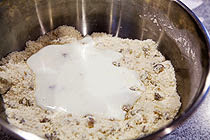
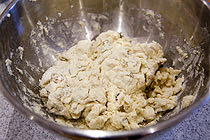
4 Make a well in the center of the flour. Pour the buttermilk into the center of the well. Use a wooden spoon to gently mix the flour into the buttermilk until the flour is moistened with the buttermilk. Then use your hands to form the mixture into a loose, shaggy, slightly sticky ball of dough. The dough should be a little sticky, if it’s too dry, add a tablespoon more of buttermilk. If it’s just too wet to handle, add a sprinkling more of flour. Do not over-mix! And at this point work quickly. As soon as the acidic buttermilk interacts with the alkaline baking soda, bubbles will form and leavening will start.
5 Break off 12-equal portions of the dough and place them in the wells of the muffin tin. Put in the oven and bake for 12-13 minutes, until the tops are nicely browned. Remove from the oven and let cool for a couple minutes in the pan. Remove the biscuits from the muffin tin to a rack to cool for a few minutes more.
Serve with butter and jam.
Hello! All photos and content are copyright protected. Please do not use our photos without prior written permission. If you wish to republish this recipe, please rewrite the recipe in your own unique words and link back to the source recipe here on Simply Recipes. Thank you!
Links:
Over-sized cherry chocolate soda bread muffinsfrom Peanut Butter and Julie
Seeded orange soda breadfrom Cook Almost Anything
Read more »

Monday, 5 January 2015

What Bloggers Should Look for in an Affiliate Network
Last week, I covered how to monetize your blog with affiliate marketing. Of course, that just begged the questions: What should a blogger look for in an affiliate network ?
Now, affiliate marketing is a business model that emerged long before blogs ever existed, and it evolved to help the merchant make sales. Helping webmasters make money was only an incentive to help merchants make those sales.
The result was that affiliate webmasters built websites that were more oriented toward promoting products. User experience (UE) was only an afterthought — i.e. make the just bearable enough so that they don’t leave before you can refer them to the advertiser’s site.
Blogs, on the other hand, are a social medium. They stand out from mere websites because they let you hold a conversation with your users/readers. It only makes sense, then, that UE is one of your priorities. After all, if you neglect UE, sooner or later you won’t have any readers left and no traffic to try and monetize through any medium, never mind affiliate marketing.
Choosing an Affiliate Network That’s Right for Bloggers
If you’re going to monetize through affiliate marketing, you’re going to need to find and affiliate network or affiliate program that’s more relationship focused . That is, you’ll have to choose a network that (1) is more than self-serve, and (2) will provide support to all affiliates equally.
These attributes are important because as an affiliate blogger , you have to do more than just buld your traffic. You have to retain it. The affiliate marketing potential of a bloglies in the influence it has over its readerscommunity. That influence stems from a relationship you develop with your readers. It only makes sense, then, that you work with an affiliate network than appreciates that importance of relationships.
More Than Self-Service
If you aren’t already an affiliate blogger , it will help to have some help along the way. After all, when you first join an affiliate network or program, it takes some time to figure out its ins and out.
Every network has has an array of products to promote, and affiliate managers often know which products work best on which sites/blogs. Being able to chat with one those managers will help you choose which products in the network to focus on promoting.
Affiliate networks/program are also all powered by different affilate software. If you want to really optimize your affiliate marketing efforts, you’ll want to get the most out of that software and the analytics it provides. Dedicated affiliate manager can also help you with that.
Finally, some affiliate programs offer more marketing tools than others. As a blogger, there are a few different ways you can promote products (e.g. sidebar ads, in-post links, etc…). An affiliate management team that’s willing to look over your site, recommend tools (and programs that offer them), can save a lot of time and energy when it comes to setting up your affiliate account.
Dedicated Support
Providing support across an entire network requires staff and that can be costly. Consequently, some networks only provide support to some of their biggest affiliates. This happens with both smaller networks that don’t have a lot of resources, and massive networks that prefer to work with so-called super affiliates . In either case, such networks only want to invest in support when they see an immediate return.
On the other hand, there are network that see affiliate support as a longer-term investment. That is, they believe in the long tail , and know that if they invest in an affiliate, that affiliate will become a better affiliate and make both of them more money. They also know that that affiliate will also stay more loyal, and continue to (effectively) promote products within the network for years to come.
As a blogger, you’d probably be more comfortable with a network that offers such dedicated support . First, they’ll be there through your growing pains, giving you the kinds of support mentioned above. Secondly, they’ll listen to your (and other affiliates’) feedback, and that intelligence will trickly back into the network/program, making it a better, and more competitive place for both advertisers and publishers.
Choosing to be an Affiliate Blogger
To succeed as a blogger, you have to passionate not only about your topic, but about your readers/users. You have to build a community and develop relationships with its members.
If you’re going to monetize your blog through affiliate marketing, then, it makes sense to choose an affiliate network/program that shows a similar appreciation for relationships and treats its members as a community. A network/program that takes the time to develop a relationship with you and it other members will not only provide better support, but will better understand what you and the rest of the network members (the community) need to succeed. Not to mention, that relationship approach is also likely to attract better advertisers who are actually interested in growing their program, rather than just moving a couple extra units during a seasonal down-turn.
Read more »
Tuesday, 9 December 2014

Why You Should Care About Your WordPress Theme
If you’re in business and have an online store, a corporate website or blog or just want to monetize your own personal blog, you’re bound to have heard of WordPress. Using WordPress is one of the easiest ways to make a fully functional, usable, easily navigable and eye-catching website that will cater to your niche or business.
But what about WordPress themes? Where do they come into play, and why should we use them? Won’t we have invested enough time and money on website content, images, hosting, and the like? Well, here is why choosing the right WordPress Theme is so important for your business.
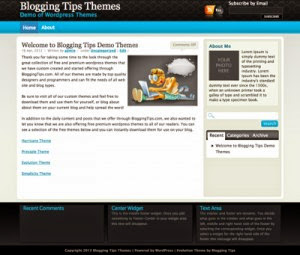 - The correct pick of a WordPress Theme can really bring out your niche. Themes are practically custom made for every niche or business. That’s why you see them named Photography themes, Magazine themes, News Portal themes, etc. For instance, Best WordPress Themesis a great example of a WordPress Template website that filters and sorts themes by category. It’s not a coincidence that every theme can be used for a specific purpose. Of course, it isn’t an exact science – if you fall in love with a theme, just because it’s labeled “photography” doesn’t mean you can’t use it as your personal blog, handicraft sales page or restaurant review website. It’s not a coincidence that there are hundreds of other websites that their sole purpose is to find and add themes to the website, making web masters easily find the best theme for their blog. You can also check Best Themes WP, or 100 WP Themesfor more WordPress Themes
– Using the right theme can optimize usability and guide your visitors’ eyes exactly where they should be. For instance, take the portfolio themes or photography themes we mentioned earlier. These WordPress templates have specific “portfolio” and “gallery” pages, most of the time as the home page, which focus on image-intensive niches, like – you guessed it – photography and design. Everyone in a specific business should make use of these special pages and templates to maximize exposure of their work. Looking at it from the other side, if you choose the wrong theme, you can lose out on a lot of things that need to stand out. You shouldn’t make your readers and potential clients have to look for your stuff. When it comes to choosing new wordpress themes, it’s best to go in with no fear, then see how your content will look with each design.
– The various widget types and functions that come with each WordPress theme by default can really help each niche, and save you precious time from searching for and adding plug-ins that weren’t there before. If you have a newsletter site, you’ll need a subscription form; if you have a restaurant or service by appointment, you need a reservation form; if you’re a blogger, you’ll need a Twitter stream and social media buttons. Advertising space for marketers, pricing tables for e-Commerce, an About Us page or footer for corporate profiles, Flickr galleries for photographers and photoblogs – the list goes on forever! (Thanks to Lars’ 11 tips on finding the best themeon Trip Wire Magazine for this one!)
 - The dilemma of free or premiumshouldn’t come that much into play here. Don’t get me wrong, none of us are rich (yet)! Free themes are awesome if you’re just starting out , but some of them have limited functions and are not unbranded. You should cough up some dough (but not that much!) and invest in a good one. We mention this here, because it’s better to research and invest in a premium WordPress theme which will have more functions, customization options, documentation and support when you’re going professional.
– Other themes can make your blog or website look happy. Others will make it look silly, or not serious enough, when the website should be professional. Sure, everything can take a little silliness or cupcake pink, but if you’re building a corporate profile or design portfolio that you want everyone to take seriously (and your name isn’t Barbie), you should try to stick to professionalism. It doesn’t have to be bland or boring, just useful and not too playful. (Thanks to Karlos from ComLuvfor his article on how to find the best WordPress themes for this idea!)
– When you’ve researched, tried, and paid for the perfect WordPress template for your website or blog, it all shows how much time, love and hard work you’ve invested in the whole thing. When you carefully pick out the best theme for your blog or website, it automatically shows how involved you are and how seriously you’re taking the whole venture. Serious is as serious does, and nothing shows you’re taking the whole thing to heart than a carefully, lovingly crafted online presence!
How has choosing the best WordPress site possible helped your business? Share your stories with us!
This guest post was written by Vicky, who is a professional copywriter and Internet Marketer, who writes for the Internet Marketing Blog Moneytized. Her favorite topics range from how to successfully create and maintain an online business, to maintaining personal relationships. When she’s not writing articles or proofreading her friends’ posts, she indulges in her personal time with her family and two cats.
Read more »